How 2026 eSports Tournaments Work: Inside LoL Franchises, CS2 Circuits, and the $12B Market

'/%3e%3cpath%20d='M4.94162%205.99547L4.02701%205.08086L3.63428%205.47359L4.94162%206.78093L7.63768%204.08487L7.24495%203.69214L4.94162%205.99547Z'%20fill='white'/%3e%3cdefs%3e%3clinearGradient%20id='paint0_linear_2302_10195'%20x1='0.5'%20y1='10'%20x2='10.4939'%20y2='10'%20gradientUnits='userSpaceOnUse'%3e%3cstop%20stop-color='%234E10FF'/%3e%3cstop%20offset='1'%20stop-color='%23AB17DF'/%3e%3c/linearGradient%3e%3c/defs%3e%3c/svg%3e)
Updated: July 24, 2026
The 2026 esports ecosystem has officially morphed into a massive $12 billion global juggernaut, completely transforming how competitive gaming operates. If you're a LATAM gamer grinding ranked matches and wondering how the path from local Discord tournaments to massive sold-out stadiums actually works, understanding this infrastructure is mandatory. Today, I'm breaking down the exact logistical framework powering the competitive scenes of heavyweights like League of Legends and Counter-Strike 2, based on recent data from Olhar Digital and Newzoo's latest market reports.
Understanding this ecosystem doesn’t just make watching Twitch streams more enjoyable; it also explains why tournament formats and game rules sometimes shift out of nowhere. From the massive world championships to the grassroots regional circuits, there’s a deliberate logistical framework powering the hype. Let’s dive right into it.

What are esports and their main gaming genres
Not every multiplayer game earns the prestigious title of an esport. For massive hits like League of Legends, Free Fire, or Counter-Strike 2 to reach their current heights, there needs to be a serious underlying structure. It requires an air-tight rulebook, an official competitive format, and most importantly, an engaged community that actively demands a fair, competitive environment.
In the esports realm, everything must be strictly measurable—from regular season points to specific in-game eliminations. Looking at the landscape, the most dominant genres right now are MOBAs, tactical FPS (First Person Shooters), fighting games, traditional sports simulators, and Battle Royale titles.

Each of these genres draws in a unique demographic, but they all share the need for a professional scene backed by reliable tournament organizers or the game developers themselves. Without official contracts and serious backing, a game remains just a weekend hobby rather than a recognized competitive discipline.
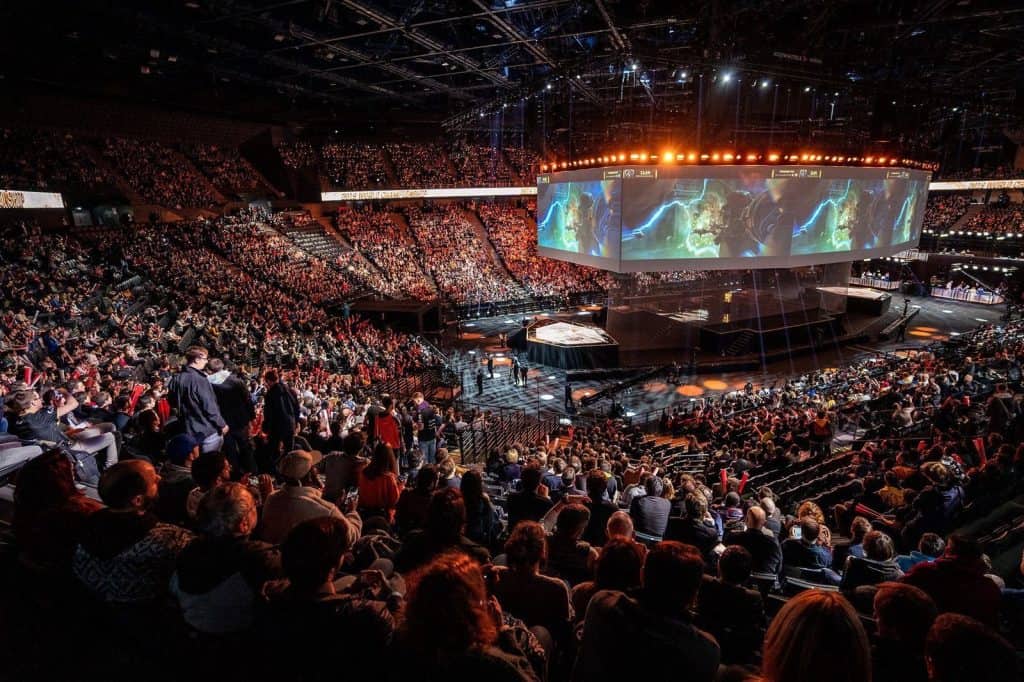
Open circuits and franchised leagues in esports tournaments
The logistics of professional esports tournaments generally fall into one of two major models, determining where the money flows and who makes the final calls. First, we have the open circuits. This model is highly popular in tactical shooters like CS2, where independent esports companies—think ESL, Intel, and BLAST—handle the actual event operations with official technical backing from Valve.
On the flip side, we have franchised leagues, a highly centralized model perfected by major industry publishers like Riot Games. In this framework, the company that developed the game controls the professional circuit entirely. Tournament slots are usually bought by partner organizations, creating a closed ecosystem. The publishers manage everything from exclusive broadcasting rights to official sponsorships and player salary caps, mirroring traditional American sports leagues.
Types of esports tournaments: from amateur to professional
The esports pyramid isn't just made up of multi-million dollar prize pools; it’s divided into three distinct competitive tiers. At the very top are the professional leagues, where the world's best players compete for massive trophies and highly lucrative contracts.
Directly below that is the semi-professional circuit. This tier acts as a crucial talent pipeline, often sponsored by secondary brands or officially supported by the game's developer to ensure a steady influx of high-level rookies ready to be scouted.
Finally, at the foundational level, we have community tournaments. These grassroot events are passionately organized by Discord communities, local content creators, and die-hard fans. Developers frequently authorize these events and occasionally throw in digital rewards or custom server access because they know this is where long-term franchise loyalty is built.
How qualifiers and group stages work in competitive gaming
Virtually every major tournament starts with the Qualifiers. During these preliminary rounds, teams face the initial gauntlet. Some qualifiers are open brackets for anyone brave enough to enter, while others are closed events strictly for invited professional rosters. Formats typically involve single-elimination brackets or double-elimination systems, which offer a forgiving lower bracket for teams that stumble early on.
Once the weak links are filtered out, the event transitions to the Group Stage. The primary goal here is consistency, racking up enough points to survive. Events utilize various formats like Round Robin, the Swiss System, or the GSL format. The golden rule remains the same: secure your spot in the standings and avoid early elimination.
The climax of the tournament arrives with the Playoffs. This is a brutal, high-stakes bracket, usually featuring best-of-3 or best-of-5 matchups. Reaching the grand finals guarantees not only championship glory and a massive chunk of the prize money but also, quite often, a direct invitation to the ultimate world championship at the end of the season.
The role of publishers in the 2026 esports market
One massive factor that sets esports apart from traditional sports is that the "playing field" is privately owned. Game developers, known as publishers, hold total intellectual property rights. This grants them the unprecedented power to buff or nerf characters in an overnight patch, altering the meta right before a major competition.
This absolute control means publishers can shut down an entire competitive scene simply by turning off the game servers if the title ceases to be profitable. This reliance on corporate vision frequently sparks debate when compared to the decentralized nature of traditional sports federations.
Financially, the esports market is an absolute juggernaut. According to the latest Global Esports Report by Newzoo and analysis from Olhar Digital, analysts predict the industry could reach a staggering $12 billion by 2031, fueled by a captive audience of over 640 million viewers globally. With nearly 60% of the ecosystem's revenue driven by broadcasting rights and massive sponsorships, understanding the business behind the gameplay adds an entirely new level of appreciation the next time you tune in to watch a grand final.

0
0
NEWSLETTER
Subscribe!
And find out the latest news
Etiquetas


