¿Cuánto dinero necesitas gastar para conseguir un arma en Free Fire?

'/%3e%3cpath%20d='M4.94162%205.99547L4.02701%205.08086L3.63428%205.47359L4.94162%206.78093L7.63768%204.08487L7.24495%203.69214L4.94162%205.99547Z'%20fill='white'/%3e%3cdefs%3e%3clinearGradient%20id='paint0_linear_2302_10195'%20x1='0.5'%20y1='10'%20x2='10.4939'%20y2='10'%20gradientUnits='userSpaceOnUse'%3e%3cstop%20stop-color='%234E10FF'/%3e%3cstop%20offset='1'%20stop-color='%23AB17DF'/%3e%3c/linearGradient%3e%3c/defs%3e%3c/svg%3e)

Si alguna vez viste una nueva Evo Gun o una skin legendaria en Free Fire y pensaste: "Seguro la saco con unos cuantos giros", tenemos que hablar. Muchos jugadores entran a los eventos con la esperanza de conseguir el premio principal rápidamente, pero los sistemas de juego funcionan de una manera muy diferente a lo que parece.
Aunque siempre existe la posibilidad de tener muchísima suerte, la realidad es que la mayoría de los usuarios necesita realizar muchos intentos antes de obtener el premio más valioso.

¿Qué es un gacha y cómo funciona?
Un gacha es un sistema basado completamente en la suerte. Cada vez que haces un giro, el juego selecciona una recompensa de manera aleatoria entre todas las opciones disponibles en ese momento.
Esto implica dos reglas fundamentales:
- Independencia de giros: Cada intento es totalmente independiente del anterior.
- Sin garantías por defecto: Obtener el premio principal nunca está asegurado, a menos que el evento cuente específicamente con mecánicas de descarte o recompensas garantizadas tras alcanzar cierto número de intentos.
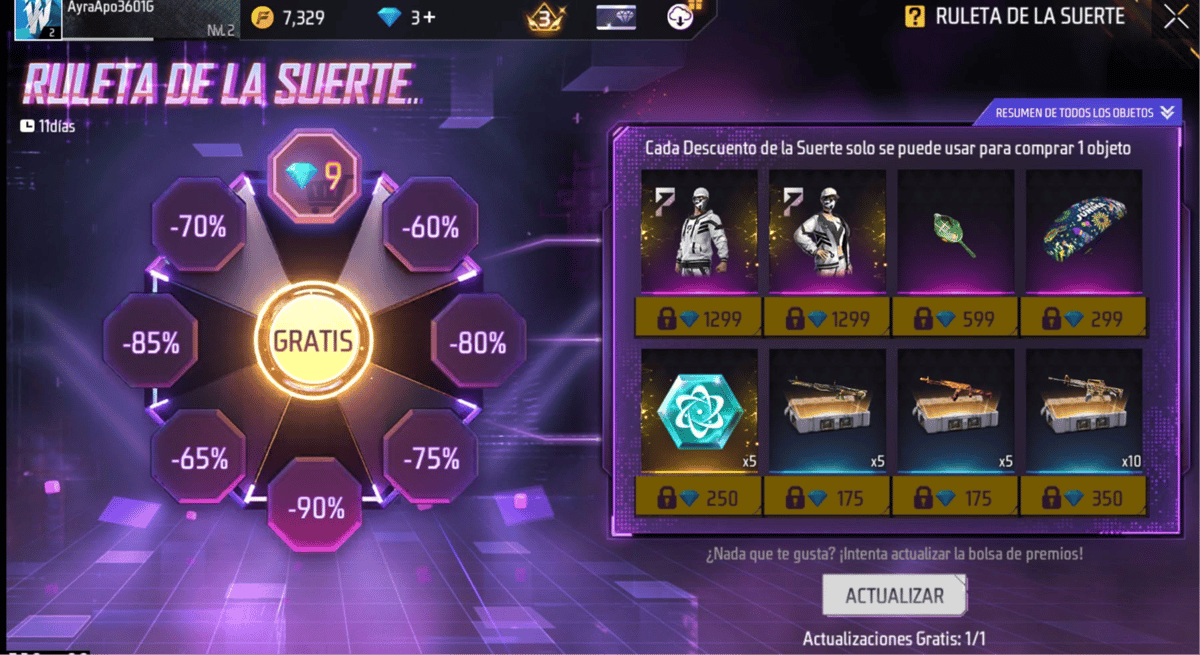
Entonces... ¿cuánto dinero necesito realmente?
No existe una respuesta exacta porque el resultado general depende por completo del azar. Dos jugadores pueden gastar exactamente la misma cantidad de diamantes y obtener resultados totalmente opuestos: uno podría conseguir el arma en sus primeros intentos, mientras que otro podría gastar miles de diamantes sin verla aparecer.
Sin embargo, las mecánicas cambian radicalmente según el tipo de evento:
1. Eventos con costo máximo garantizado (Ejemplo: Faded Wheel)
Existen eventos con un límite máximo de giros donde las recompensas no se repiten y el costo aumenta en cada intento. Si el premio principal no aparece antes, lo obtendrás obligatoriamente en el último giro.
Tu cuenta de OLA vale premios
Juega La Garra, busca el tesoro y canjea en la Tienda. Crear la cuenta es gratis.
Crear mi cuenta| Giro | Costo |
|---|---|
| 1 | 9 💎 |
| 2 | 19 💎 |
| 3 | 39 💎 |
| 4 | 69 💎 |
| 5 | 99 💎 |
| 6 | 149 💎 |
| 7 | 199 💎 |
| 8 | 499 💎 |
| Total | 1,082 💎 |
Tomando como referencia una recarga oficial de aproximadamente 12,400 diamantes por 99.99 USD, conseguir los 1,082 diamantes necesarios para completar todos los giros equivale a un gasto aproximado de 8.72 dólares. En este formato, el jugador sabe exactamente cuál es el peor escenario matemático y cuánto tendrá que invertir como máximo.
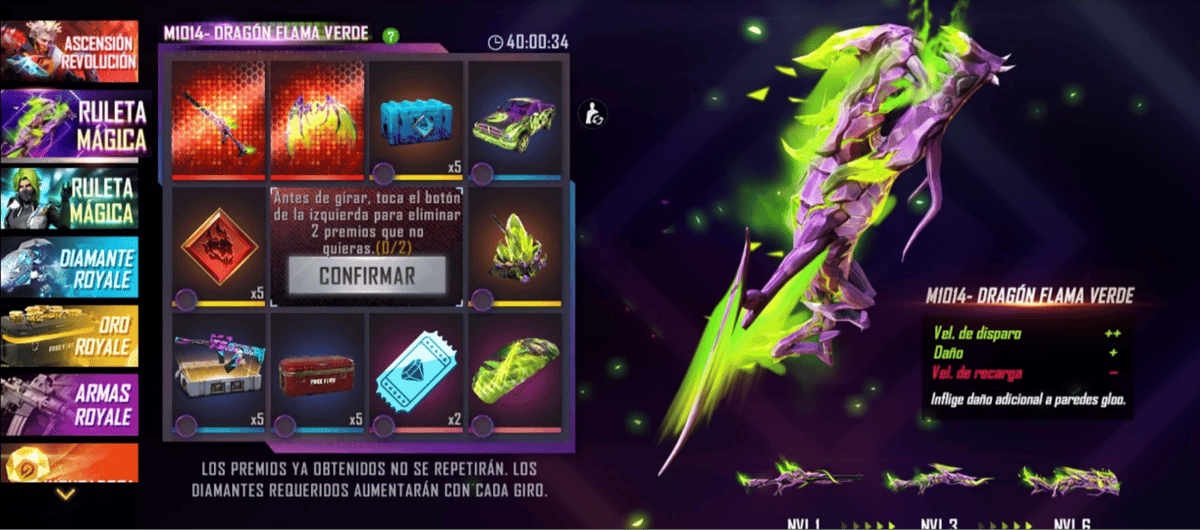
2. Eventos basados en azar puro y probabilidades acumuladas
En cambio, en los gacha completamente aleatorios (como algunas Token Tower o eventos de suerte pura), no existe un costo máximo garantizado. Supongamos un escenario donde un arma tiene una probabilidad de obtención teórica del 0.10 % por giro (aproximadamente una posibilidad entre mil), con un costo hipotético de 9 diamantes por giro:
| Probabilidad acumulada de éxito | Giros aproximados | Diamantes necesarios estimados |
|---|---|---|
| 25 % de probabilidad | 288 giros | 2,592 💎 |
| 50 % de probabilidad | 693 giros | 6,237 💎 |
| 75 % de probabilidad | 1,386 giros | 12,474 💎 |
| 90 % de probabilidad | 2,302 giros | 20,718 💎 |
El factor de la suerte y la falsa impresión en redes
¿Por qué algunos jugadores consiguen el arma en el primer giro? Porque la suerte existe. Aunque las probabilidades sean muy bajas, siempre habrá alguien que obtenga el premio rápidamente.
Estos casos afortunados suelen hacerse virales con facilidad en plataformas como TikTok, YouTube o Facebook. Sin embargo, lo que casi nunca se muestra son los cientos o miles de usuarios que gastaron muchos más diamantes sin obtener el mismo resultado. Esto puede dar una falsa impresión de que conseguir el arma es una tarea más sencilla de lo que realmente es.
Antes de gastar tus diamantes...
Si estás pensando en participar en un evento de tipo gacha, es recomendable que te hagas las siguientes preguntas:
- ¿Estoy dispuesto a no obtener el premio principal incluso si gasto mis diamantes?
- ¿Tengo un presupuesto máximo definido antes de empezar a girar?
- ¿Estoy gastando dinero o recursos que realmente puedo permitirme perder?
Recuerda siempre que los giros funcionan por probabilidad y no por turnos. Haber fallado muchas veces consecutivas no significa que el siguiente intento vaya a ser obligatoriamente el ganador.

Lo que debes saber antes de participar en un gacha
Los sistemas gacha forman parte de la experiencia de juego y pueden ser entretenidos si se participa en ellos con expectativas realistas. La clave fundamental es recordar que la suerte no tiene memoria. Un jugador puede conseguir una Evo Gun en pocos giros, mientras que otro podría necesitar una inversión significativamente mayor.
Establecer un límite de gasto saludable te permitirá disfrutar del evento de forma responsable, entendiendo que el mejor giro siempre será aquel que no te haga gastar más de lo que estabas dispuesto a invertir desde el principio.
Consigue diamantes gratis en nuestra pagina
4
0
Otras novedades que podrían interesarte
Etiquetas


