
'/%3e%3cpath%20d='M4.94162%205.99547L4.02701%205.08086L3.63428%205.47359L4.94162%206.78093L7.63768%204.08487L7.24495%203.69214L4.94162%205.99547Z'%20fill='white'/%3e%3cdefs%3e%3clinearGradient%20id='paint0_linear_2302_10195'%20x1='0.5'%20y1='10'%20x2='10.4939'%20y2='10'%20gradientUnits='userSpaceOnUse'%3e%3cstop%20stop-color='%234E10FF'/%3e%3cstop%20offset='1'%20stop-color='%23AB17DF'/%3e%3c/linearGradient%3e%3c/defs%3e%3c/svg%3e)
You wake up. You grab your phone. You go out. You buy a little coffee. $2,500. It’s just a coffee… what could go wrong?
Absolutely everything.
Because that “harmless” coffee is actually a silent vampire draining your wealth without you even noticing. And the worst part is you do it every single day thinking “it’s just a coffee.”
Numbers don’t lie. Do the math.
The financial vampire effect explained with videogames
Imagine in an RPG you have an item that drains -10 HP per day. Sounds small, right? But after a month, you’ve lost 300 HP. In a year, 3,650 HP. And you never leveled up because that constant damage kept you weak.
Your daily coffee is exactly that: recurring damage to your wealth.
A $2,500 coffee every day is $75,000 per month. That’s $900,000 per year. Almost a million. Yes, you read that right. A million pesos in COFFEE.
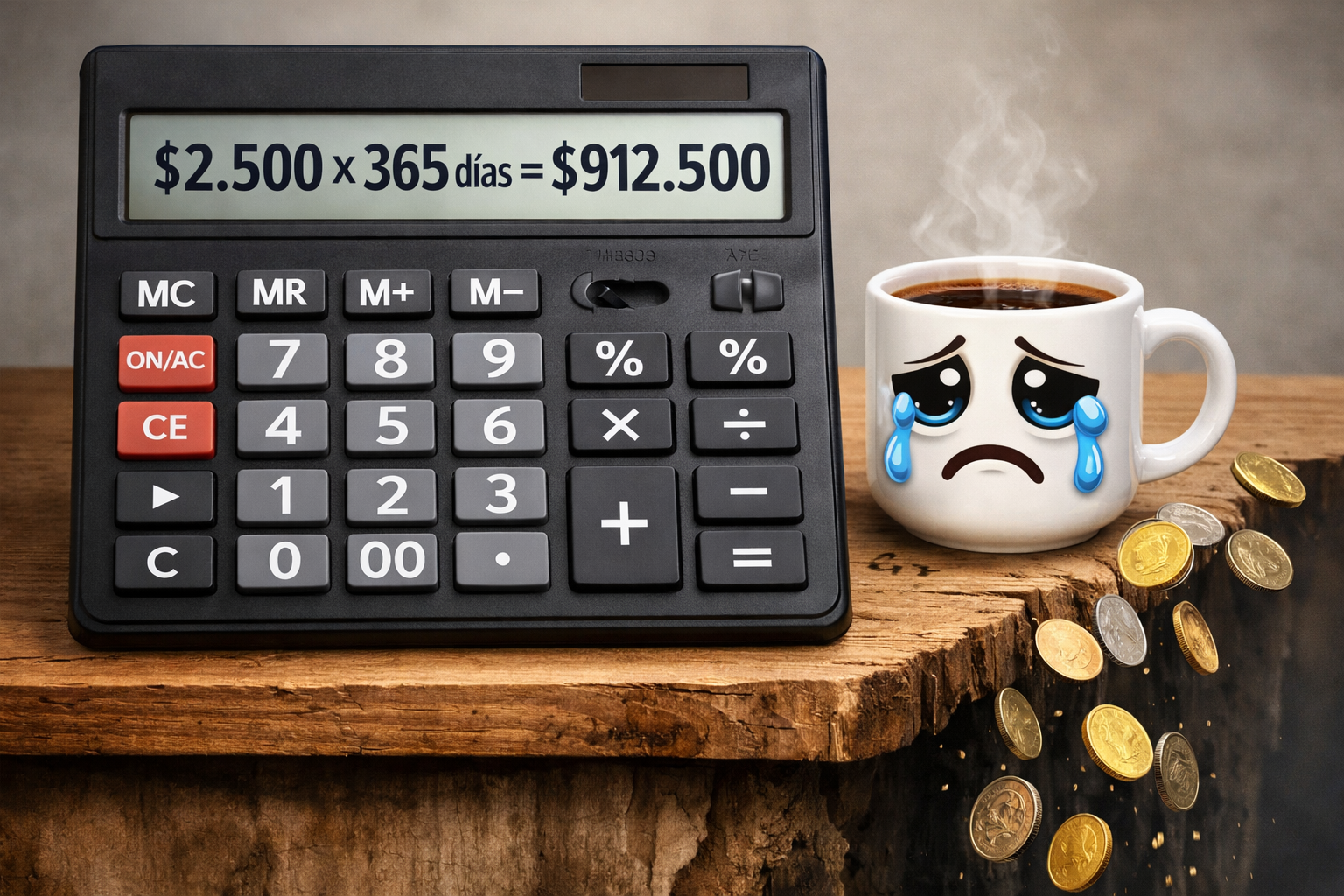
But here comes the painful part: that million pesos, invested at a conservative 10% annual return in dollars for 10 years, becomes more than $7,000 USD. In 20 years, more than $18,000 USD. With compound interest, that coffee is costing you a high-end gaming PC, a trip to Europe, or the down payment on a property.
Still “just a coffee”?
Why people who understand money don’t fall into the small expense trap
People who build wealth don’t obsess over every dollar, but they DO understand opportunity cost. Every dollar you spend is a dollar you’re not investing. And every dollar you invest today is exponentially more valuable in the future.
The point is not to never drink coffee. The point is avoiding automated, unconscious spending.
Want a coffee? Go ahead. But make it a conscious decision, not a zombie expense you execute without thinking. The difference between drinking coffee three times a week versus every day is $450,000 per year. Almost half a million pesos that could be working for you instead of evaporating as steam.
People who get it do this: they make coffee at home (cost: ~$500 per month for good quality coffee), save $74,500 monthly, and automatically invest that difference. Month after month. Year after year.

Time horizon is everything. The one who understands that this daily expense is actually future wealth being thrown away completely changes the game.
The Don Roi lesson
This applies to coffee, unused subscriptions, food delivery you order out of laziness, taxis you take when you could walk. Small expenses are silent wealth killers.
1. Spend less than you earn. If you can’t, then you need to earn more.
2. Save and invest FIRST every month, before anything else.
3. Increase that percentage over time. Target: 10–20% of your income.
4. With the rest: live your life. Time goes fast.
The key is not to live like a monk. It’s to be aware of where your money goes and decide actively what you want it to do: give you short-term pleasure or build long-term freedom.
Weekly tip
Track ALL your expenses for one week. Every single one. Every coffee, every snack, every Uber. Use an app, a spreadsheet, or your phone notes. At the end of the week, multiply by 4 for the month, and by 12 for the year.
It’s going to hurt when you see the numbers. Good. That pain is the first step to change.
Then pick ONE small expense, the biggest one, and eliminate it automatically. Spending $20,000 a month on delivery? Do meal prep on Sundays. $15,000 on coffee? Buy a $30,000 coffee machine that pays for itself in two months.
And most importantly: take that saved money and set up an automatic transfer into an investment the day you get paid. Pay yourself first. Always.
Coffee is not the enemy. Unconscious spending is.
Don ROI: learn personal finance by playing
At Don ROI, we believe learning about money shouldn’t be complicated. That’s why we create content and trivia about personal finance, saving, budgeting, financial habits, debt, beginner investing, and passive income—so anyone can improve their relationship with money step by step.
If you want to learn how to save better, organize your expenses, understand how an emergency fund works, or discover smarter financial decisions, explore more Don ROI articles and join our weekly trivia.

Frequently asked questions about personal finance and saving
How do I start improving my personal finances?
The first step is understanding how much you earn, how much you spend, and which financial habits you need to fix to move toward clear goals.
What’s more important: saving, paying debt, or investing?
It depends on your current financial situation, but generally you should organize expenses, build savings, and understand your debt costs before making advanced decisions.
How can I learn about money in a simple way?
A good way is consuming clear, practical content and reinforcing it with exercises, questions, or trivia that help you retain key concepts.
What topics does Don ROI cover?
Don ROI creates content about saving, budgeting, financial habits, financial education, debt, financial goals, beginner investing, and passive income.

2
0
NEWSLETTER
Subscribe!
And find out the latest news


