
'/%3e%3cpath%20d='M4.94162%205.99547L4.02701%205.08086L3.63428%205.47359L4.94162%206.78093L7.63768%204.08487L7.24495%203.69214L4.94162%205.99547Z'%20fill='white'/%3e%3cdefs%3e%3clinearGradient%20id='paint0_linear_2302_10195'%20x1='0.5'%20y1='10'%20x2='10.4939'%20y2='10'%20gradientUnits='userSpaceOnUse'%3e%3cstop%20stop-color='%234E10FF'/%3e%3cstop%20offset='1'%20stop-color='%23AB17DF'/%3e%3c/linearGradient%3e%3c/defs%3e%3c/svg%3e)
In recent years, Nintendo and Rockstar Games (through their parent company, Take-Two Interactive) have intensified their legal actions and internal policies against modders: individuals or groups who modify a game’s original software to alter or expand its content. This conflict raises a central question within the gaming and creator communities:
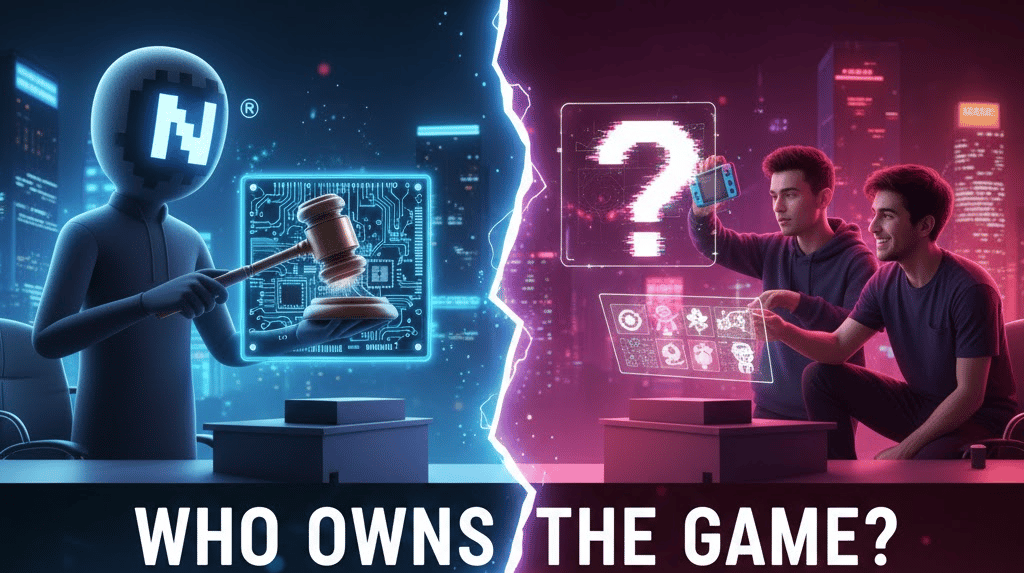
Who really owns a video game, and to what extent is it legal to modify it? This article examines recent cases, the legal context surrounding game modification (modding), and how companies defend their intellectual property rights.
What is modding and why does it matter?
Modding involves altering a video game’s software to change its appearance, functionality, or behavior, or even to introduce entirely new content. These modifications can be purely cosmetic or functional and, in some cases, are distributed publicly for other players to use.
From a legal standpoint, the code, assets (such as images, sounds, and characters), and licenses of a game remain the property of the developer or publisher, even if the user has purchased a copy of the game. For this reason, certain types of mods may infringe copyright laws or licensing agreements by creating derivative works without explicit permission.
Nintendo: zero tolerance toward unauthorized modding
Recent cases and legal actions
Nintendo has pursued multiple legal actions against individuals who distribute mods or tools that allow pirated games to run on consoles such as the Nintendo Switch. A landmark case ended with a $2 million settlement against U.S. modder Ryan Michael Daly, operator of the Modded Hardware store.
Your OLA account is worth prizes
Play the Claw, hunt the treasure and redeem in the Store. Creating an account is free.
Create my accountAccording to court documents, Daly sold modified consoles (with modchips) and devices that bypassed the Switch’s security protections, allowing the playback of unlicensed Nintendo games.
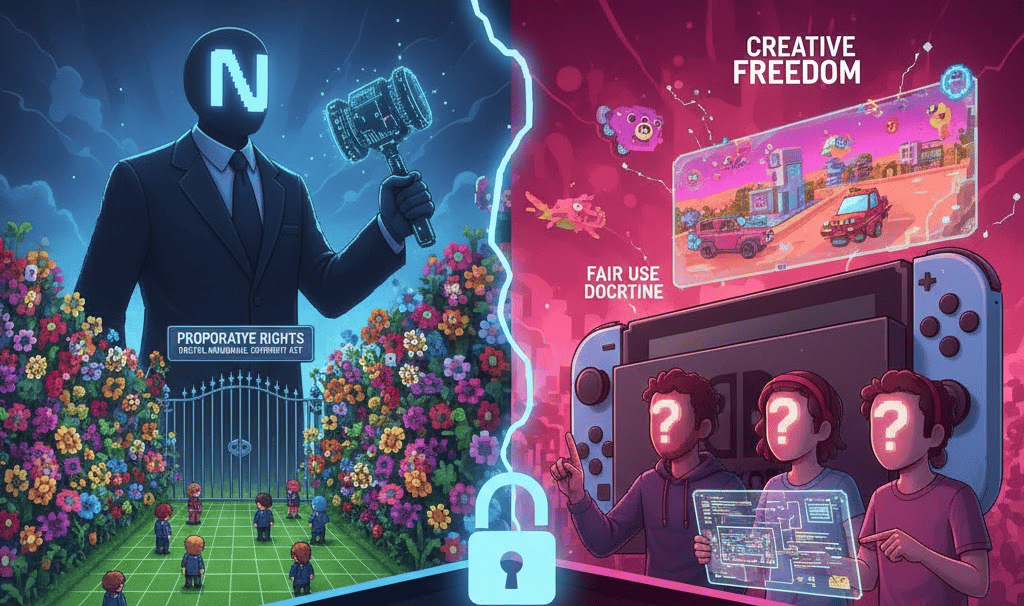
The ruling included a permanent injunction prohibiting Daly from selling or possessing tools designed to circumvent security measures and authorized Nintendo to take control of his website to prevent future violations.
Nintendo’s legal arguments
Nintendo argues that functional modifications enabling access to or distribution of unauthorized content violate both copyright laws and the provisions of the Digital Millennium Copyright Act (DMCA) in the United States, which prohibits the circumvention of technological protection measures.
The company also emphasizes that the license agreements accepted by users when acquiring the software explicitly limit the right to modify, distribute, or reverse-engineer the code or operating system.
Rockstar Games and Take-Two: limited tolerance and legal action
A history of conflict
Rockstar Games, known for titles such as Grand Theft Auto (GTA), has had an ambivalent relationship with the modding community. At times, it has allowed single-player mods and non-commercial projects that respect third-party intellectual property rights.
However, the company and its parent, Take-Two Interactive, have taken legal action against projects that distribute game code without authorization or interfere with online services.
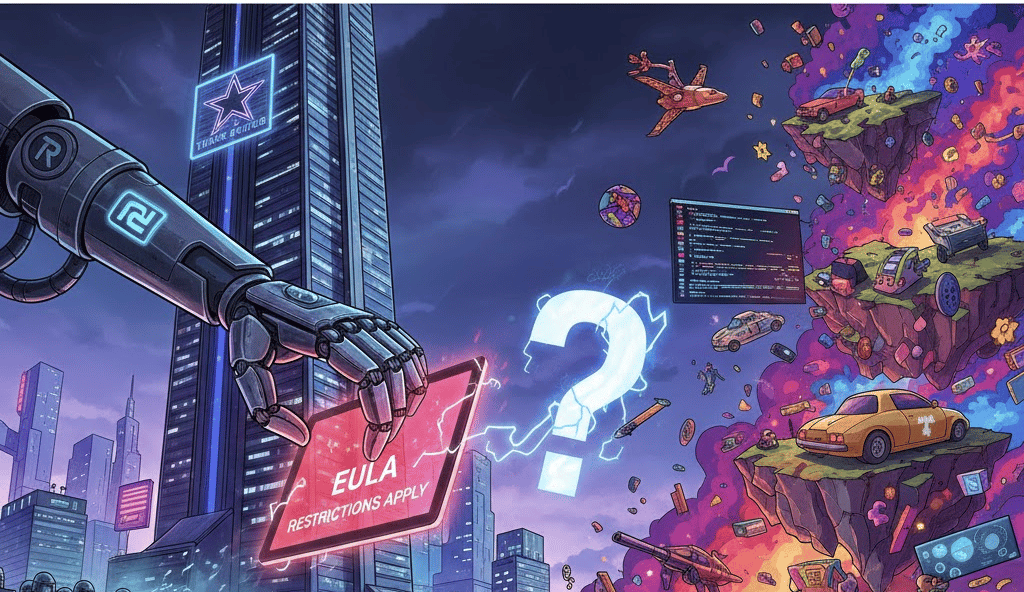
For example, in 2015 Rockstar updated the End User License Agreement (EULA) for the PC version of Grand Theft Auto V, prohibiting reverse engineering or software modification and establishing penalties such as bans from online services for users who employ mods.
Acquisition of modders and policy shifts
In 2023, Rockstar announced the acquisition of the development team behind FiveM, a popular Grand Theft Auto V modification focused on roleplay servers. This move marked a shift in strategy, directly integrating mod creators into its official structure under new terms.
Specific legal disputes
Take-Two has also sued modding teams for alleged copyright infringement when modifications include unlicensed portions of the original code or involve reverse engineering projects.
In some cases, the company argued that modders were aware of the lack of authorization to copy or adapt elements of the game.
Who owns your game?
The legal answer varies by jurisdiction, but there is a general consensus:
- The user owns a license to use the software, not the right to freely modify or redistribute it.
- The copyright holder retains ownership of the game’s code and assets.
- Unauthorized mods may constitute illegal derivative works if they include copyrighted elements or circumvent technological protection measures such as those established under the DMCA.
This legal framework explains why companies like Nintendo and Rockstar can sue modders and remove mods from circulation even when they are not created for commercial purposes.
6
0
Other news you might be interested in
Etiquetas


