What are spam and scam? Key differences

DairSS
'/%3e%3cpath%20d='M4.94162%205.99547L4.02701%205.08086L3.63428%205.47359L4.94162%206.78093L7.63768%204.08487L7.24495%203.69214L4.94162%205.99547Z'%20fill='white'/%3e%3cdefs%3e%3clinearGradient%20id='paint0_linear_2302_10195'%20x1='0.5'%20y1='10'%20x2='10.4939'%20y2='10'%20gradientUnits='userSpaceOnUse'%3e%3cstop%20stop-color='%234E10FF'/%3e%3cstop%20offset='1'%20stop-color='%23AB17DF'/%3e%3c/linearGradient%3e%3c/defs%3e%3c/svg%3e)
8 months ago
61
1
0
What is spam in cryptocurrencies
Spam in the cryptocurrency world refers to unsolicited messages promising quick profits, fake payment alerts, or free airdrops.
Where it is distributed
These messages arrive via email, social media, Telegram, or Discord.
How it builds trust
They often mimic legitimate platforms to appear trustworthy.
What it seeks
They include links to fake websites that steal private keys or install malware.
Psychological tactic
It exploits urgency or user inexperience to prompt quick, unthinking action.
Spam: Mass advertising
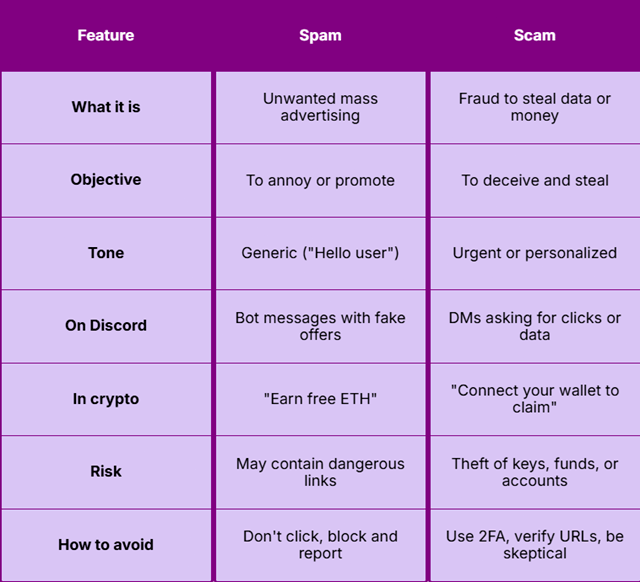
Spam refers to messages sent in large volumes without permission, mainly via email, SMS, or messaging apps. Its purpose is to promote products or services, although it often hides risks such as malicious links or validating active email addresses. Although modern filters detect and move it to spam folders, they are not always effective. They often use generic phrases like "Dear user" and lack personalization.
Scam: Fraud with intent to steal
A scam is a fraudulent action designed to obtain money, passwords, or account access. It uses emotional manipulation: urgency, fear, or false trust. A typical example is phishing, where a fake message impersonates a trusted company to redirect you to a cloned page and steal your data. It often includes your name, specific details, and subtly incorrect links. It can come via email, calls, direct messages, or deceptive ads.
Comparison
Recommendations
- Use strong, unique passwords and store them in a reliable password manager.
- Enable two-factor authentication (2FA) using an app like Google Authenticator or Authy.
- Limit direct messages to friends only and restrict contact requests.
- Don’t click on links from unknown sources, especially those promising airdrops, prizes, or technical support.
- Always verify the sender’s identity and check official websites before acting.
- Avoid sharing wallet details: never reveal your recovery phrase or private keys.
- Use a hardware wallet (like OneKey, Ledger, or Trezor) for enhanced security.
- Regularly review devices connected to your account and log out suspicious sessions.
- Be cautious with bots: only add verified ones and review their permissions.
- Report and block accounts sending spam or attempting to deceive.
- Prevention is key: be skeptical of anything that seems too good to be true.
1
0
NEWSLETTER
Subscribe!
And find out the latest news
Other news you might be interested in
Etiquetas


