A CEO asked ChatGPT how to avoid paying $250 million. It backfired, and the game smashed records

'/%3e%3cpath%20d='M4.94162%205.99547L4.02701%205.08086L3.63428%205.47359L4.94162%206.78093L7.63768%204.08487L7.24495%203.69214L4.94162%205.99547Z'%20fill='white'/%3e%3cdefs%3e%3clinearGradient%20id='paint0_linear_2302_10195'%20x1='0.5'%20y1='10'%20x2='10.4939'%20y2='10'%20gradientUnits='userSpaceOnUse'%3e%3cstop%20stop-color='%234E10FF'/%3e%3cstop%20offset='1'%20stop-color='%23AB17DF'/%3e%3c/linearGradient%3e%3c/defs%3e%3c/svg%3e)
A CEO asked ChatGPT how to avoid paying $250 million. It backfired, and the game smashed records
Some video game industry stories read like a screenplay. This one has a multimillion-dollar contract, three founders fired in a backstab, a judge swinging hard, and at the center of it all a detail that turns the whole thing into legend: the CEO of one of the world's biggest publishers asked ChatGPT for advice on how to wriggle out of a $250 million bonus. The chatbot told him it would be difficult. He ignored it. And that's where everything started to go sideways.
The game in question is Subnautica 2. Spoiler for the ending, because it's the best part: the title Krafton claimed "wasn't ready" has become one of the most explosive launches of the year.
The contract that started it all
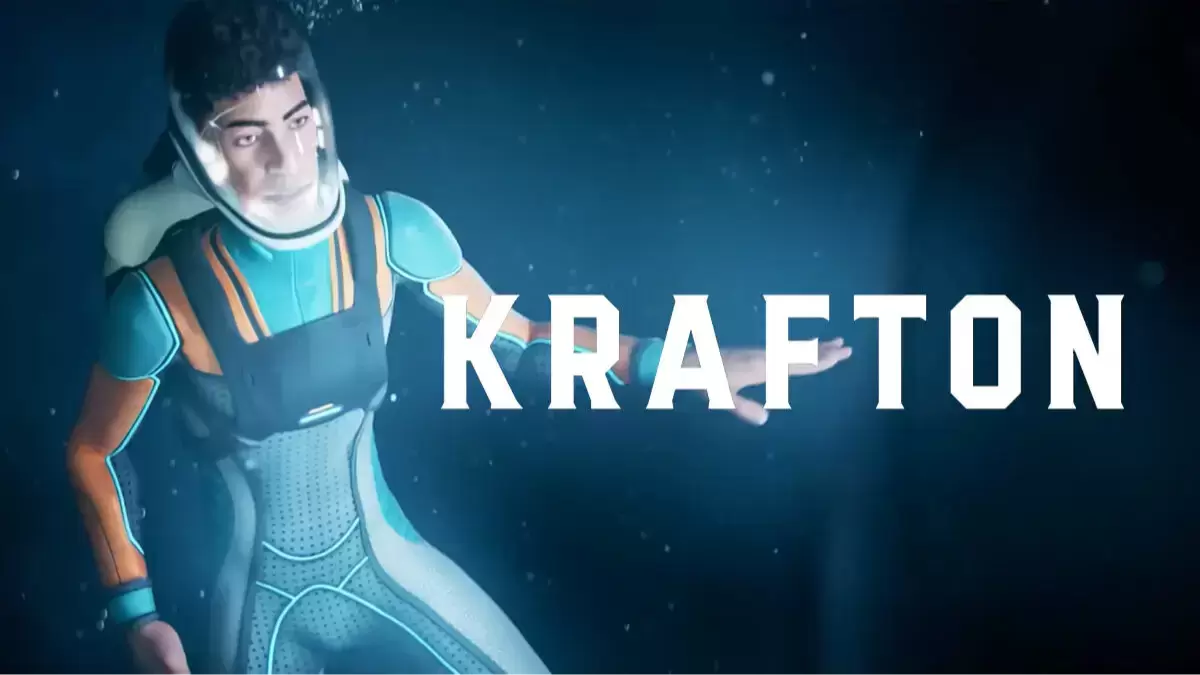
In 2021, Krafton (the South Korean company behind the PUBG phenomenon) bought Unknown Worlds, the studio behind Subnautica, for $500 million upfront, plus an earnout (a performance bonus) of up to $250 million more, tied to the studio's revenue. The original deadline to hit those numbers: December 31, 2025.
To close the deal, Krafton agreed to two conditions that would later hang around its neck like a stone. First: the three "key employees" (co-founders Charlie Cleveland (creative director) and Max McGuire (technical director), plus CEO Ted Gill) retained operational control of the studio. Second: they could only be fired "for cause." Not on a whim, not for strategy. For demonstrable cause.
That clause is the heart of everything that came next.
The maneuver
As Subnautica 2 approached its Early Access launch, internal projections showed something uncomfortable for Krafton's leadership: the game was going to sell more than enough to trigger the $250 million bonus. And according to the later ruling, that's exactly what the company didn't want to pay.
On July 1, 2025, Krafton fired Cleveland, McGuire, and Gill. The official reason was a supposed "absence of core leadership" and an unfinished game; the publisher even spoke of "a profound sense of betrayal" toward fans. The three responded with a lawsuit in Delaware's Court of Chancery, accusing Krafton of the opposite: of deliberately sabotaging the launch, delaying it, and dodging the bonus in the process. Krafton countersued, claiming the executives had "abandoned" their duties and downloaded company data en masse, and even that Cleveland had been moonlighting in filmmaking.
A solid corporate soap opera, up to this point. And then the chatbot showed up.
Enter ChatGPT
This is the detail that set the internet on fire. As Vice Chancellor Lori W. Will wrote in her ruling: fearing he had signed a "pushover" contract, Krafton's CEO, Changhan Kim, turned to an artificial intelligence chatbot to contrive a corporate "takeover" strategy.
The sequence, as the ruling describes it, is almost comic. Krafton's head of corporate development, Maria Park, warned Kim that a "for cause" firing wouldn't eliminate the obligation to pay the $250 million without exposing the company to enormous legal and reputational risk. Instead of listening to his own legal department, Kim consulted ChatGPT. When the bot replied that the bonus would be "difficult to cancel," he didn't accept that answer either. He pressed on anyway.
A chatbot query ending up cited as evidence in a Delaware business ruling is probably one of the first cases of its kind. And it says a lot about the era we're in: even to scheme a $250 million play, someone decided it was worth getting a second opinion from an AI.
The ruling: the judge pulled no punches
On March 16, 2026, Lori W. Will ruled in favor of the founders in "Phase One" of the trial. Her language was withering: frustrated by the key employees' refusal to give up operational control, and facing a nine-figure liability, she wrote, Krafton "went searching for a pretext." And she left a quote worth framing: this court of equity will not allow a party to fabricate "cause" where the evidence shows the decision to fire had already been made.
The consequences were concrete and painful for Krafton:
- Ted Gill was reinstated as CEO of Unknown Worlds, with full authority over the Early Access launch and restored access to the Steam platform.
- The bonus window was extended by 258 days, from December 31, 2025 to September 15, 2026. In other words, the clock Krafton wanted to let run out started over in the developers' favor.
- Weeks later, in April 2026, Krafton's name vanished as publisher from the Subnautica 2 pages on Steam, Epic, and Xbox. Today Unknown Worlds is listed as both developer and publisher.
There was one last skirmish: the devs accused Krafton of skirting the court order by announcing the Early Access date on its own, without Gill's involvement. They later withdrew that specific accusation. But the reputational damage was already done.
The ending nobody asked for (least of all Krafton)
This is where the story shifts from courtroom drama to public humiliation. Subnautica 2 launched in Early Access on May 14, 2026, at $29.99 on Steam, Epic, Microsoft Store, and Xbox Series X|S, with day-one availability on Game Pass. What happened next was record-breaking:
- 1 million copies in the first hour.
- 2 million within the first 12 hours.
- 4 million in five days, generating an estimated $100 million in revenue.
- 651,000 peak concurrent players across platforms (over 467,000 on Steam alone), and roughly 6.5 million players in total.
- A "Very Positive" rating on Steam.
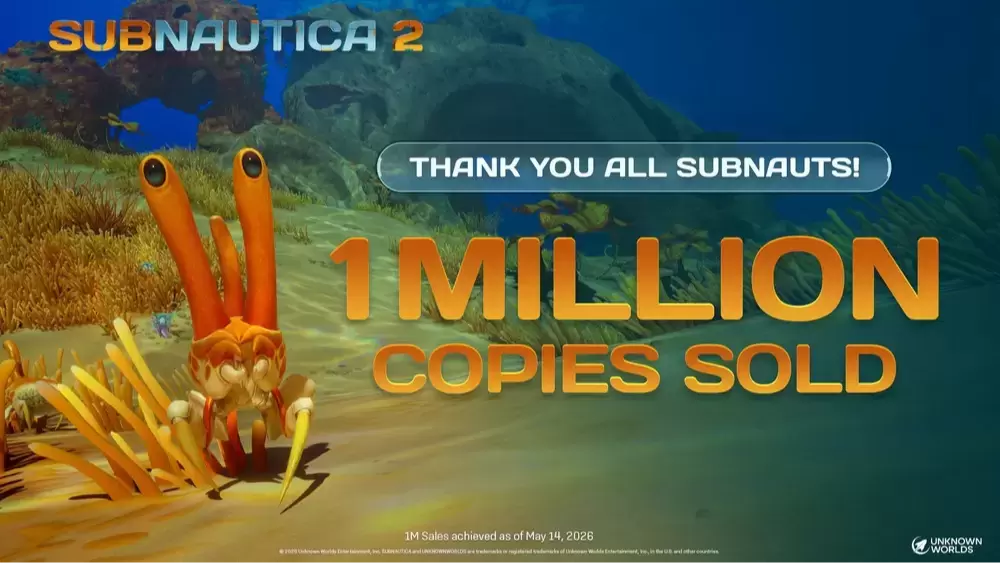
Within a few weeks the figure had climbed to 5 million copies and around $122 million gross, according to analyst Alinea Analytics. That made it the best-selling game on Steam in May by units, ahead of Forza Horizon 6 (which sold about 2.5 million), and the fastest-selling 2026 launch on the platform. For reference, the original Subnautica has sold 18.5 million copies, over its entire lifetime.
Remember: this is the game that, according to Krafton, "wasn't ready."
What it all leaves us with
There are three lessons here, and each one could be its own article.
The first is straight out of the M&A playbook: be careful with "for cause" termination clauses and heavily leveraged earnouts, because they create incentives for the buyer to sabotage the very thing it promised to champion. The second is about AI as legal evidence: we're entering an era where conversations with a chatbot can end up transcribed in a ruling, and that record doesn't forgive. The third, the most human, is almost poetic: Krafton tried to save $250 million, and its own strategy may not only end up costing it that money anyway, but it turned Subnautica 2 into a symbol of community versus publisher. Players picked a side, and it wasn't the multinational's.
Sometimes the villain of the story writes his own punishment. In this case, it looks like he asked a chatbot to help him do it.
0
0
NEWSLETTER
Subscribe!
And find out the latest news
Other news you might be interested in
Etiquetas


