The Witcher 3 Uses AI to Restore Geralt's Voice With Actor's Consent


Artificial intelligence is once again at the center of a debate in the video game industry, but this time the situation is very different. CD Projekt RED confirmed that it will use AI technology to restore the original sound of Geralt of Rivia's voice in The Witcher 3: Songs of the Past, a new expansion scheduled for 2027. The decision involves Jacek Rozenek, the actor who has voiced the witcher in Polish since 2007 and suffered a stroke in 2019 that changed his voice. However, there is one crucial detail: the actor is still personally performing the character's lines and has authorized the use of this technology to modify his new recordings.
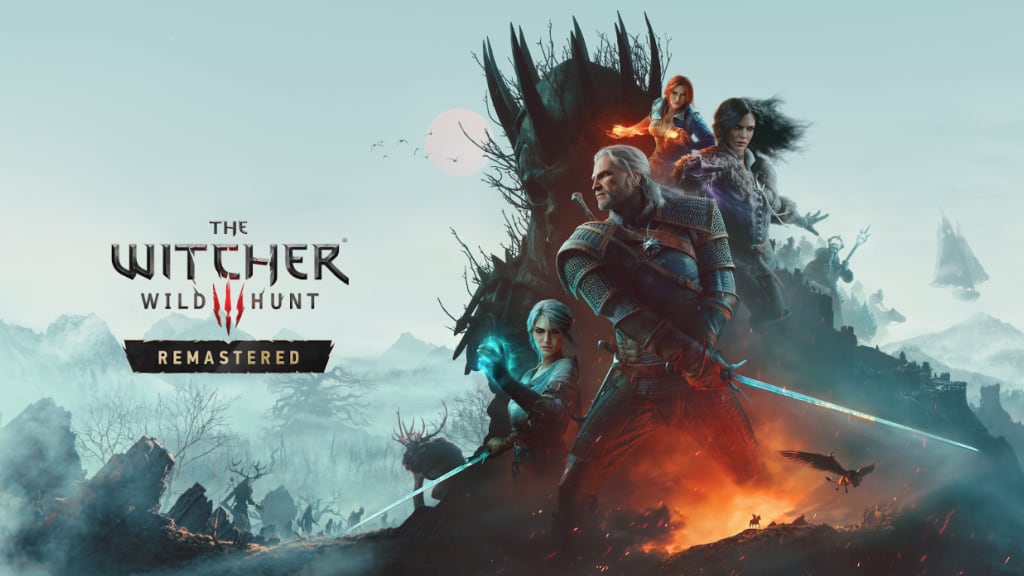
On November 11, 2026, journalist Stephen Totilo published an investigation in Game File revealing an important technological decision made by CD Projekt RED, the studio behind The Witcher and Cyberpunk 2077.
The developer confirmed that it is working with Respeecher, a company specializing in AI-powered voice technology, to modify Geralt's new recordings in the Polish version of The Witcher 3: Songs of the Past.
The goal is not to create an entirely new voice or replace the original performer, but to make Jacek Rozenek sound the way he did when he recorded his dialogue for The Witcher 3 more than a decade ago.
The news has attracted attention because it comes at a time when the use of artificial intelligence to generate voices continues to raise concerns among actors, developers, and players.

Why Will The Witcher 3 Use Artificial Intelligence for Geralt's Voice?
To understand CD Projekt RED's decision, we first need to look at the story of the actor who has portrayed Geralt for almost two decades.
Jacek Rozenek is the character's original Polish voice actor, having played the role since the first The Witcher game, released in 2007.
His performance also appeared in The Witcher 2 and The Witcher 3: Wild Hunt, as well as the Hearts of Stone and Blood and Wine expansions.
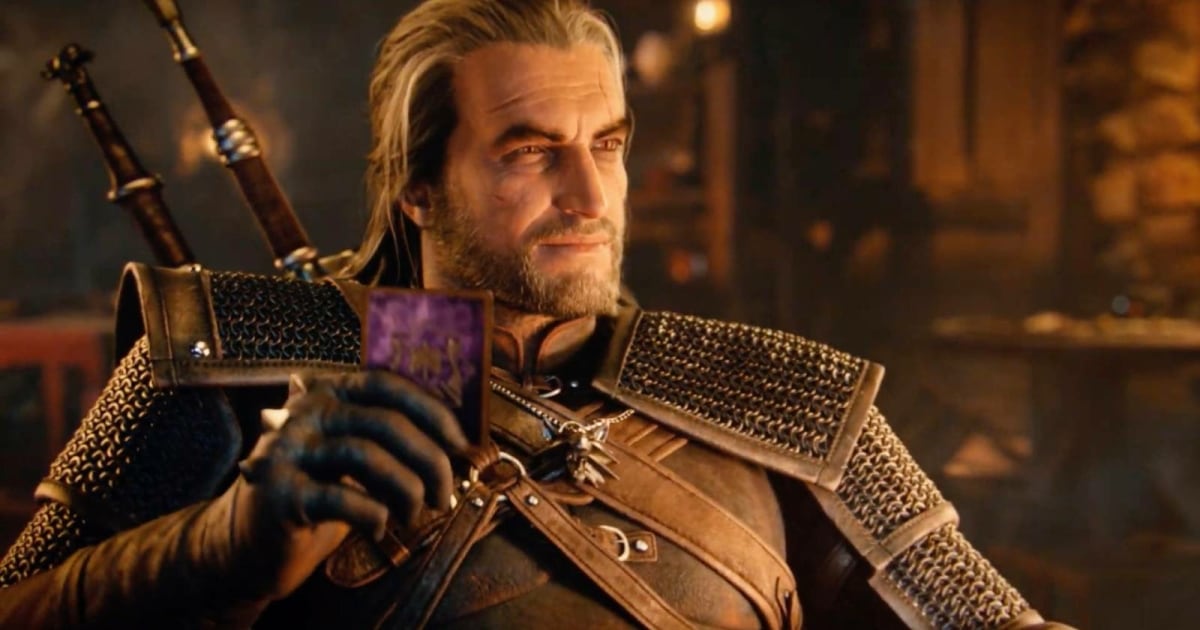
According to Game File's investigation, Rozenek recorded approximately 10,000 lines of dialogue for The Witcher 3 during the development of the original adventure.
However, in 2019, he suffered a stroke that significantly affected his ability to speak.
For several months, he was unable to use his voice in the same way as before and had to undergo rehabilitation to recover it.
The actor reportedly spent six or seven hours a day performing vocal training exercises, hoping to return to his profession.
His recovery allowed him to resume acting, and in 2021 he recorded new lines for a quest that was later added to the next-generation update of The Witcher 3, released in 2022.
Although he managed to complete that recording session, Rozenek acknowledged that the effort had been exhausting.
Over the years, his voice has also changed: it is now deeper and rougher than when he originally portrayed Geralt.
This became one of the main challenges in developing the new expansion.
The Challenge of Songs of the Past: Two Different Versions of the Same Voice
The new The Witcher 3 expansion, titled Songs of the Past, will once again take players on an adventure starring Geralt of Rivia.
However, its story takes place around the same period as the original game.
This means the character's voice needs to maintain a certain degree of consistency with the dialogue Rozenek recorded approximately twelve years ago.

According to Mikołaj Szwed, CD Projekt RED's localization director, the team invited the actor to its facilities to assess how much his voice had changed.
During that meeting, the developers discovered a considerable difference between Rozenek's current voice and the one heard in the 2015 game.
The challenge was not limited to the new quests.
The expansion will also include reactions, combat shouts, and new lines that players may hear in existing areas of the original game.
As a result, players could hear an older Geralt line followed seconds later by a recent recording featuring a noticeably different voice.
CD Projekt RED felt that this difference could affect the consistency of the performance.
That was when the studio began exploring a technological alternative that would allow it to keep the original actor without forcing him to physically reproduce a voice he no longer has.
How Will the AI Modifying Geralt's Voice Work?
CD Projekt RED decided to collaborate with Respeecher, a company that develops voice transformation and reproduction tools.
The technology uses existing recordings to build a model capable of modifying the characteristics of a voice.
However, in this case, artificial intelligence is not creating Geralt's dialogue from scratch.
The process described by the studio works as follows:
- Jacek Rozenek personally performs Geralt's new dialogue, just as he has in previous installments.
- CD Projekt RED provides Respeecher with the actor's original recordings from The Witcher 3.
- The company uses that material to develop a voice transformation model.
- The actor's new performances are processed to bring their sound closer to the original recordings.
- The results are reviewed to preserve the natural delivery and consistency of the game's dialogue.
The company also explained that one of its biggest challenges was preserving the emotional nuances of the performances.
The process was not simply about changing the pitch of the voice, but also preserving elements such as screams, pauses, expressions of anger, and Geralt's reactions during combat.
According to those responsible, development required many hours of work and technical adjustments.
The human performance remains the foundation of the result, while AI is used to modify certain sonic characteristics.
This distinction is essential to understanding why the studio considers this case different from other projects that use artificially generated voices.
Geralt's Original Voice Actor Authorized the Use of Artificial Intelligence
One of the most important aspects of this news is that Jacek Rozenek gave his consent for his performance to be modified using artificial intelligence.
The actor explained to Game File that his intention is to maintain consistency with the voice he used when recording the original dialogue.
He also expressed confidence in the team responsible for the game.
This means that, at least according to the published statements, this is not a recreation made behind the performer's back.
Instead, Rozenek returned to the studio, performed his new lines, and took part in a project that incorporates voice transformation tools with his authorization.
Mikołaj Szwed acknowledged that artificial intelligence raises significant concerns within the voice acting industry.
However, he defended the decision as an exceptional case in which the technology can be used with consent and for a specific purpose.
The CD Projekt RED representative stated that the actor's particular circumstances were a decisive factor in choosing this approach.
Nevertheless, the investigation does not publish every detail of the contractual agreement, so it is not possible to establish its financial terms or the exact scope of the rights to use his voice.
Will Geralt's English Voice Also Be Changed?
No. The new technology will be applied to Geralt's Polish performance, not to every version of the game.
In English, the character will continue to be voiced by Doug Cockle, who has portrayed the witcher throughout the franchise.
CD Projekt RED has not announced an equivalent treatment for his voice in Songs of the Past.
Nor has the company announced that the project involves replacing the performers of other localized versions with artificial intelligence.
Therefore, there is no official announcement indicating that the new expansion will use AI-generated voices in Latin American Spanish, European Spanish, or other languages.
The confirmed process specifically concerns the continuation of Jacek Rozenek's performance in the Polish version.
CD Projekt RED Had Already Used AI to Restore a Voice in Cyberpunk 2077
This is not the first time CD Projekt RED has worked with Respeecher.
The studio previously used this technology during the development of Cyberpunk 2077: Phantom Liberty.
On that occasion, the goal was to preserve the Polish voice of Viktor Vektor, a character originally portrayed by Miłogost Reczek.
Reczek passed away in 2021, before work on the Cyberpunk 2077 expansion had been completed.
Instead of completely replacing the character's vocal identity, CD Projekt RED used voice recreation technology with the actor's family's authorization.
However, there is a fundamental difference between the two projects.
In Phantom Liberty, the original performer had passed away and could not record new lines.
In Songs of the Past, Jacek Rozenek is alive, has returned to the role, and has personally performed the new material.
Therefore, although both projects use artificial intelligence tools, the sources of the recordings and the performers' involvement are not equivalent.
This distinction is important when discussing the possible ethical uses of a technology that can also be employed without authorization or to avoid hiring actors.
Is It Ethical to Use Artificial Intelligence to Modify an Actor's Voice?
The case of The Witcher 3 raises an important question: can artificial intelligence help preserve an artist's work without becoming a threat to their profession?
There is no single answer that automatically applies to every project.
Within the voice acting industry, one of the main concerns is that companies could use generative models to reproduce voices and reduce the need to hire performers.
A synthetic voice may imitate certain sonic characteristics, but that does not mean it can independently create a dramatic performance.
Actors bring intention, emotion, expressive choices, and an understanding of their characters that is essential to storytelling.
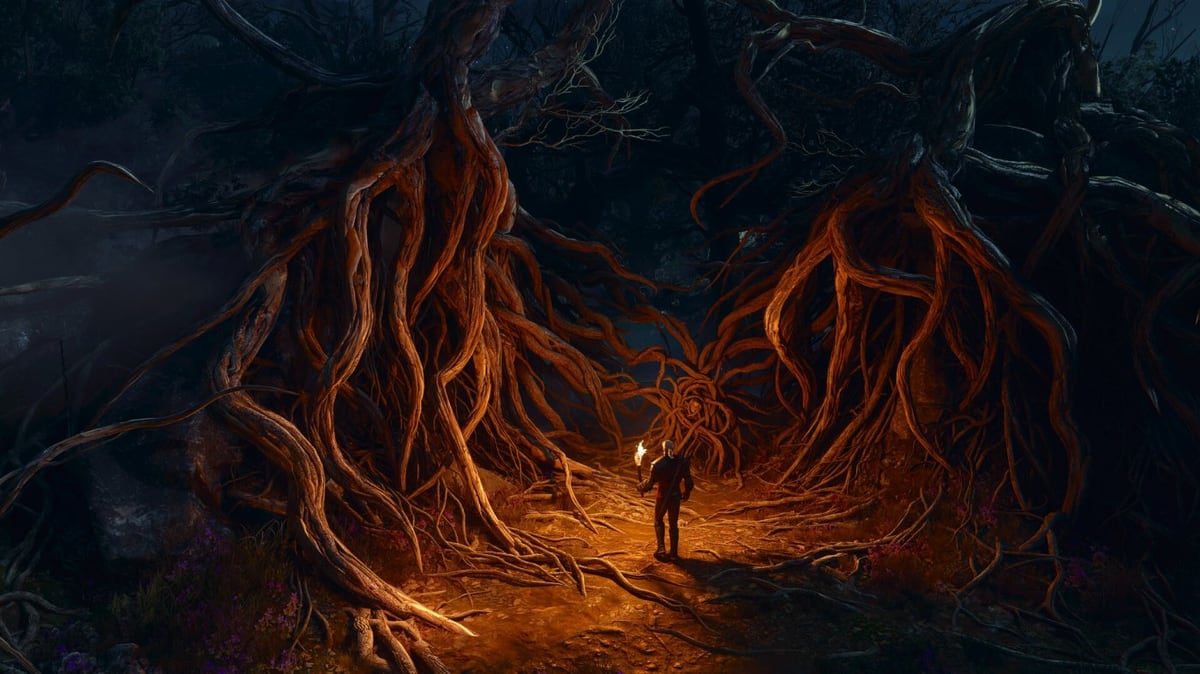
For that reason, the debate should not be limited to determining whether a production uses artificial intelligence.
It is also necessary to consider how the technology is used, who authorized its implementation, and what happens to the original performer's work.
Geralt's case presents several relevant circumstances:
- Human involvement: the original actor personally recorded his new performances.
- Consent: Rozenek authorized the treatment of his voice.
- A specific purpose: the technology seeks to preserve the character's consistency within a story set during the same period.
- Professional continuity: the studio chose to retain the original performer rather than replace him.
These elements do not automatically eliminate every possible concern.
For example, it remains important to know what rights an actor retains over their voice model, how long it can be used, and whether their authorization can be modified or withdrawn.
Those conditions should not be assumed simply because consent was given.
Nevertheless, Rozenek's active participation distinguishes this case from situations in which a company generates an artificial voice without obtaining a new performance from the artist.
The Real Risk Is Not Just AI, but Replacing the Performer
Artificial intelligence offers tools that can improve recording processes, audio restoration, and content adaptation.
However, its use also creates the possibility that some companies may consider it unnecessary to hire certain professionals.
That is one of the biggest risks facing voice actors.
A tool capable of imitating a voice should not automatically be treated as a complete replacement for the profession.
Acting is not simply about producing a recognizable sound.
It also requires understanding what is happening in a scene, reacting to other characters, portraying emotions, and maintaining a consistent performance throughout the story.
The difference between using AI to adapt an actor's work and using it to avoid hiring them deserves to be at the center of this discussion.
In The Witcher 3: Songs of the Past, the developer says it chose a technological solution to retain the original performer.
This decision can be seen as an opportunity to discuss how technology might be used as a supporting tool, provided there is informed consent, professional oversight, and respect for artists' rights.
But a case with these characteristics does not prove that every use of artificially generated voices is equally responsible.
Each project must be evaluated according to the conditions under which it is produced.
What Is The Witcher 3: Songs of the Past, and When Will It Be Released?
The controversy surrounding Geralt's voice is related to the new expansion for The Witcher 3: Wild Hunt, officially announced by CD Projekt RED on May 27, 2026.
Songs of the Past will be the game's third major expansion, following Hearts of Stone and Blood and Wine.
Development is being handled by CD Projekt RED and Fool's Theory, a studio whose team includes professionals who previously worked on the franchise.
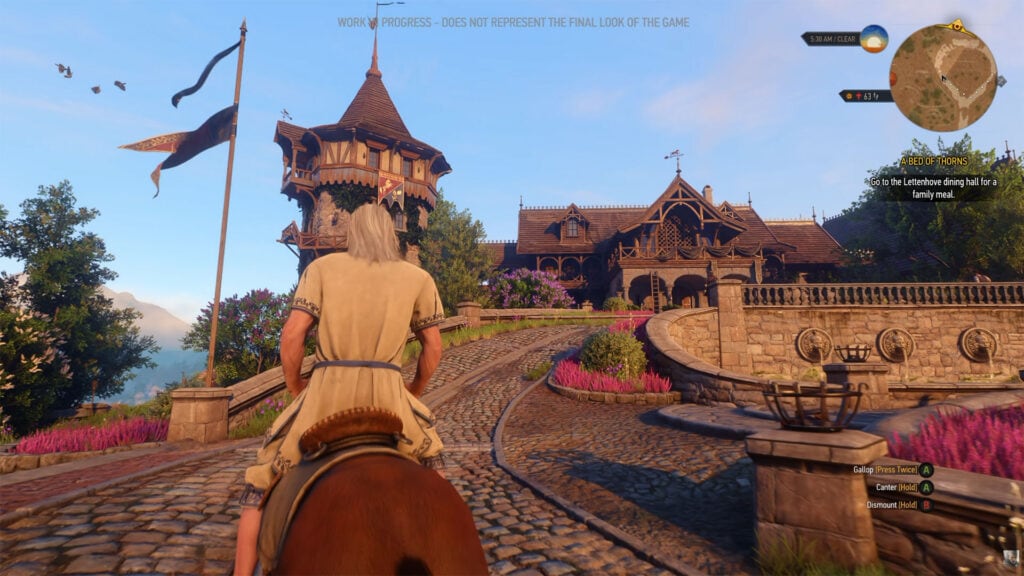
The new adventure will take Geralt to Letten, a region presented as a seemingly peaceful land filled with traditions, celebrations, and rural landscapes.
However, beneath that peaceful appearance lies a dark secret that the witcher must investigate.
The announced features include:
- A new explorable region: Letten, featuring new characters, quests, and secrets.
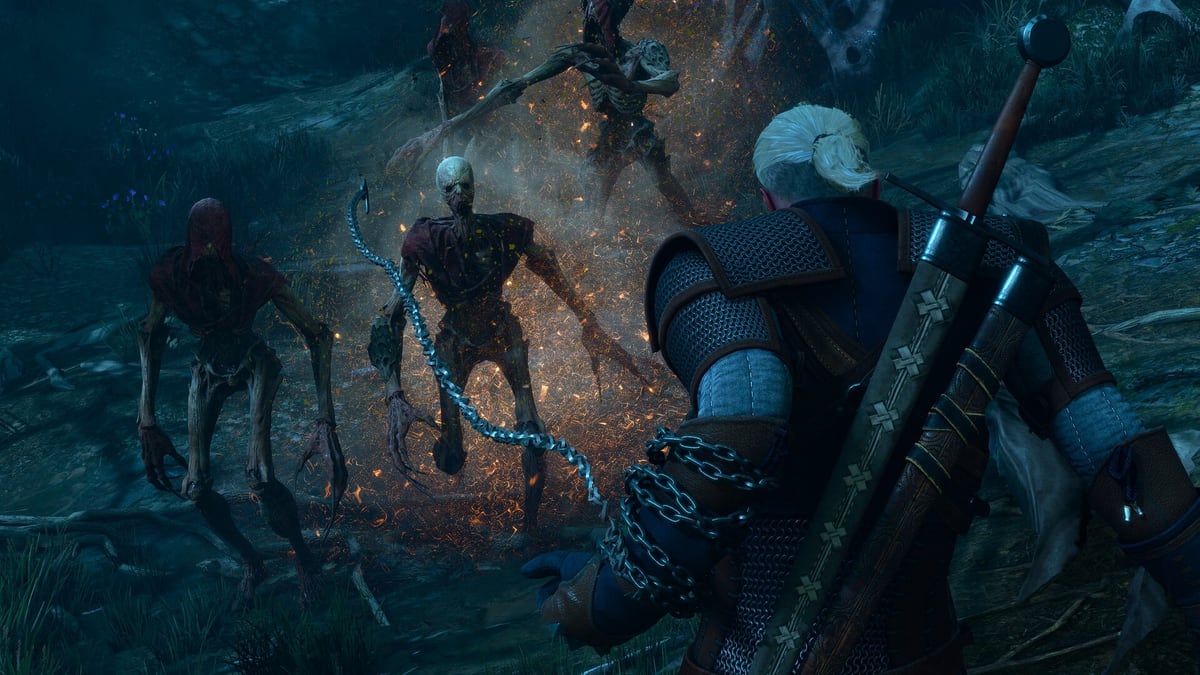
- New enemies: creatures and threats Geralt has never faced before.
- New abilities: expanding combat and exploration possibilities.
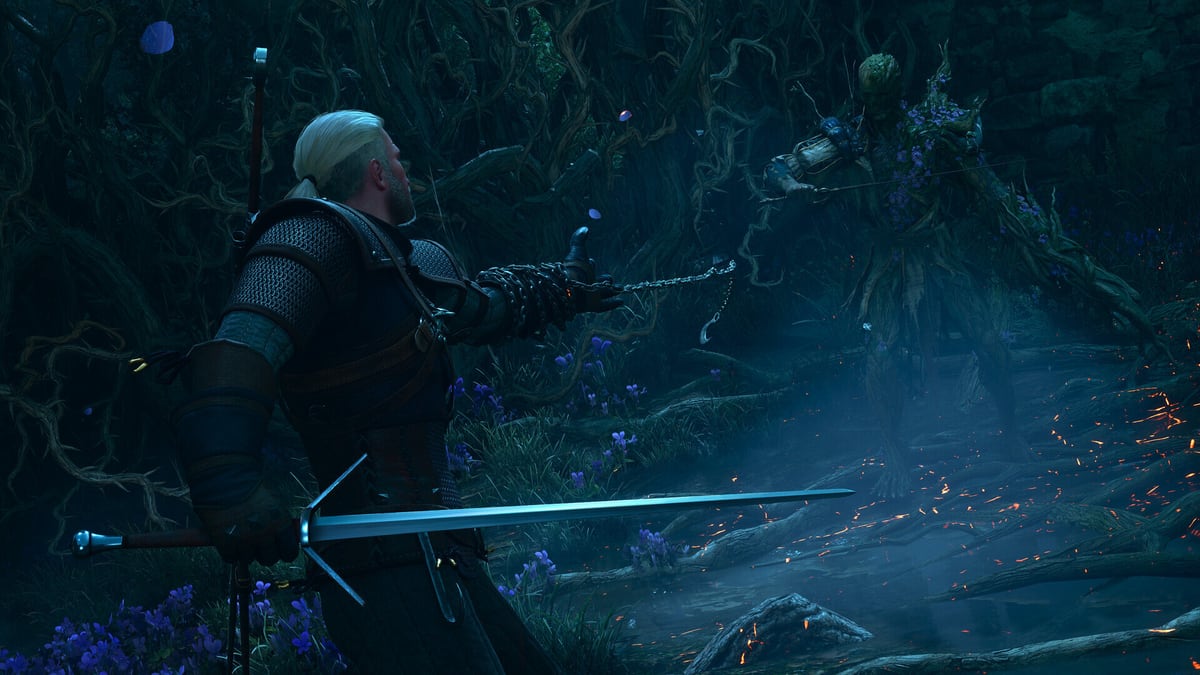
- A new weapon: a chain that introduces additional combat options.
- An additional storyline: featuring choices and consequences tied to the witcher's adventures.
The expansion is scheduled for 2027 on PC, PlayStation 5, Xbox Series X|S, and Nintendo Switch 2.
It will also be paid content, separate from the Remastered update released in September 2026.
CD Projekt RED has not yet confirmed an exact release date or final price for Songs of the Past.
You can find details about its story and platforms in the official CD Projekt RED announcement.
Geralt's Voice Sparks a New Debate About the Future of Acting
CD Projekt RED's decision represents an interesting case in the ongoing discussion about artificial intelligence in video games.
Rather than using a tool to directly replace Jacek Rozenek, the studio decided to keep him as the performer and technologically modify his new recordings.
The actor authorized the process and expressed confidence in those responsible for the project.
This does not mean that AI in voice acting is free of risks, but it demonstrates that there are important differences between the various ways this technology can be implemented.
Artificial intelligence can threaten actors' livelihoods when it is used to replace them without fair involvement, but it can also become a supporting tool when developed around their performances and with their consent.
In this case, Geralt of Rivia will retain the voice of the actor who has accompanied him since the beginning of the franchise, albeit with technological processing intended to restore the sound players originally heard.
The Witcher 3: Songs of the Past will arrive in 2027, allowing players to experience the final result of this collaboration between Rozenek, CD Projekt RED, and Respeecher.
The question raised by this news goes beyond a single expansion:
Should artificial intelligence be used to replace human voices, or to help actors continue bringing their characters to life?
To read the original investigation, visit Stephen Totilo's Game File, along with coverage from Vandal and Video Games Chronicle.
Join OLAGG and stay up to date with all the latest gaming news
0
0
Create your account and play OLA TCG Battle
You get 34 free credits — enough for 6 packs or 34 battles. No deposit.
Sign up and playOther news you might be interested in
Etiquetas


